Hotel star ratings in Vietnam explained: what they actually mean
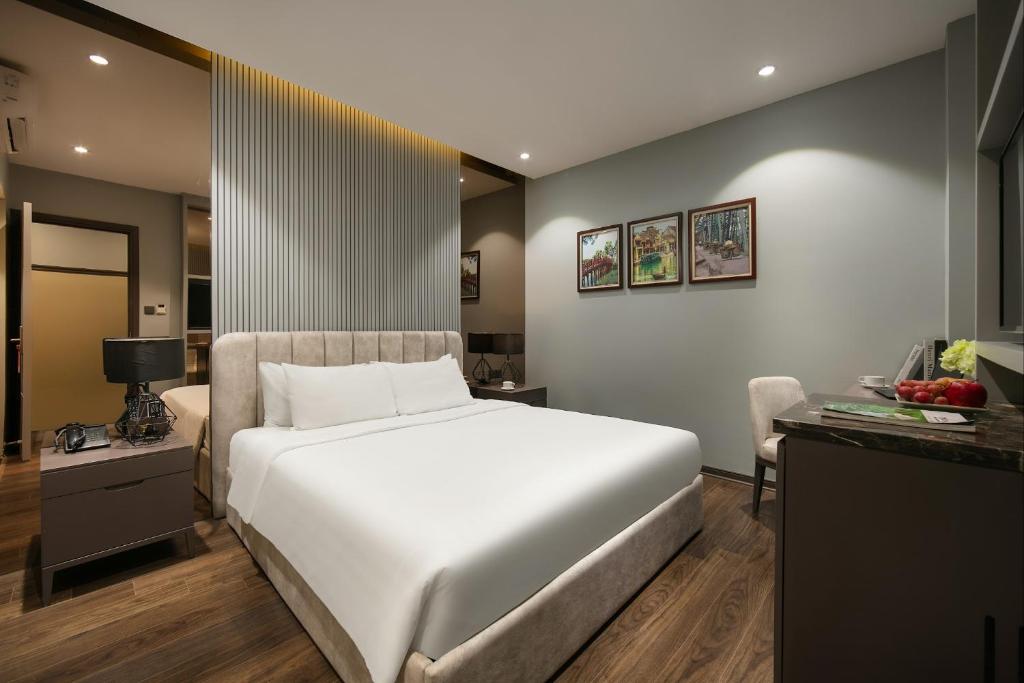
Hotel star ratings in Vietnam explained: what they actually mean is written as a practical decision guide—so you can plan faster, avoid misunderstandings, and reduce friction in Vietnam/Hanoi.
Some details (prices, policies, procedures) change over time; use this as a framework and confirm with providers when needed.
You’ll find checklists and a short FAQ to apply immediately.
Quick summary
- Stars aren’t just aesthetics: they usually reflect a defined standard set for facilities and service.
- Don’t rely on stars alone: read recent reviews and check real photos.
- Match the trip goal: business needs differ from family leisure.
- Ask explicitly: breakfast, invoices, child policy, check-in/out.
- Tip: prioritize transparency and consistent recent feedback.
What hotel star ratings generally signal
Star ratings typically reference a structured set of criteria—facility standards, safety and hygiene, service processes, and consistency. Real-world experience still depends on day-to-day operations.
- 1–2 stars: minimalist, budget-first, basic comfort.
- 3 stars: balanced price–comfort–service; often suitable for standard business trips.
- 4–5 stars: higher service standards and more add-on services; usually higher pricing.
Five checks beyond the star number
- Recent reviews: prioritize the latest 30–90 days.
- Guest photos: calibrate expectations.
- Location vs your plan: near your agenda beats “central” marketing.
- Clear policies: cancellation, surcharges, check-in/out rules.
- Business workflow: invoices, payment and confirmations.
How to pick by trip type
- Business: quiet room, reliable connectivity, easy mobility.
- Family: space, safety, nearby food options.
- Exploration: access to target neighborhoods and attractions.
Use stars as a starting point, then decide based on fit: location, recent feedback, and policy clarity.
A practical base for your Hanoi plan
- If your plan is concentrated in West Hanoi (Me Tri – My Dinh – Cau Giay), Ping Hanoi Hotel can be a practical base for day-to-day movement.
- For packed itineraries, confirm key needs early (arrival timing, invoices, special requests) to reduce friction.
Safety and time-saving notes
- Pin your hotel and key stops on maps; keep screenshot backups.
- Add 20–40 minutes buffer between stops to protect your schedule.
- Carry only daily cash; keep important documents secure with backups.
- Weather can shift—keep an indoor plan for rain.
Practical add-on 1: apply-it-now checklist
This add-on helps you execute “Hotel star ratings in Vietnam explained: what they actually mean” with less friction, especially when schedules change.
- Confirm key items in writing (email/messages) so you can reference them later.
- Pick 2–3 priorities per day; avoid overpacking the itinerary.
- Keep an indoor backup plan for rain (museum, café, mall).
- Store document backups and emergency contacts on your phone.
Practical add-on 2: apply-it-now checklist
This add-on helps you execute “Hotel star ratings in Vietnam explained: what they actually mean” with less friction, especially when schedules change.
- Confirm key items in writing (email/messages) so you can reference them later.
- Pick 2–3 priorities per day; avoid overpacking the itinerary.
- Keep an indoor backup plan for rain (museum, café, mall).
- Store document backups and emergency contacts on your phone.
Practical add-on 3: apply-it-now checklist
This add-on helps you execute “Hotel star ratings in Vietnam explained: what they actually mean” with less friction, especially when schedules change.
- Confirm key items in writing (email/messages) so you can reference them later.
- Pick 2–3 priorities per day; avoid overpacking the itinerary.
- Keep an indoor backup plan for rain (museum, café, mall).
- Store document backups and emergency contacts on your phone.
Practical add-on 4: apply-it-now checklist
This add-on helps you execute “Hotel star ratings in Vietnam explained: what they actually mean” with less friction, especially when schedules change.
- Confirm key items in writing (email/messages) so you can reference them later.
- Pick 2–3 priorities per day; avoid overpacking the itinerary.
- Keep an indoor backup plan for rain (museum, café, mall).
- Store document backups and emergency contacts on your phone.
Related reading
Frequently asked questions (FAQ)
Do star ratings guarantee a great stay?
Not always. Stars are a signal—recent reviews and guest photos often predict experience better.
Is a 3-star hotel good for business travel?
Often yes if the location and consistency fit your schedule. Prioritize quiet and logistics.
Should I trust marketing photos?
Use both, but rely more on recent guest photos to avoid unrealistic expectations.
What should I confirm before booking?
Check-in/out, cancellation terms, surcharges, breakfast, invoices, and special requests.
When does 4–5 star make sense?
When you want higher standardization, more services, or a lower-risk comfort baseline.
Share This Article
Book Ping Hanoi Hotel
Phone: (84.4) 3 7858408 / 3 7858409
Hotline: 0904.77.14.26
Email: sales@pinghotel.vn
Address: 26 Me Tri Ha, Nam Tu Liem, Hanoi
Location note: About 800m from Keangnam Landmark 72 (walkable).


