Jet lag in Hanoi: my story of struggle and recovery
I used to think jet lag was just a manageable kind of tiredness. Then I landed in Hanoi after a long flight and realized it was more than sleepiness at the wrong time. It slowed my thinking, changed my appetite, and made me overestimate how functional I really was.
This is my real story of jet lag in Hanoi: what the first days felt like, what helped me recover, and why a practical hotel rhythm mattered more than I expected.
Quick verdict
- Jet lag is real and stronger than I expected.
- Fastest recovery: live by local time as early as possible.
- Most important rule: don’t overload your first 24–48 hours.
Morning light changed everything
I forced myself outside early for light, a short walk, and coffee. Morning light helped my body understand that this was the new day. It worked better than any hack I tried.
Eating by Hanoi time
I made myself eat on local schedule, even when my body wasn’t asking for it yet. Jet lag is not only about sleep—it also affects hunger and digestion.
The trap: sleeping the wrong way
I wanted to sleep half the day to catch up. Every time I did too much, I stayed wide awake at night. Short naps and disciplined evening sleep helped far more.
12 tips that helped me reduce jet lag in Hanoi
- Tip 1: Get morning light on day one.
- Tip 2: Walk lightly instead of staying in bed.
- Tip 3: Eat by local time.
- Tip 4: Keep the first 24–48 hours light.
- Tip 5: Nap briefly if needed, but not too long.
- Tip 6: Hydrate well after the flight.
- Tip 7: Slow the evening down.
- Tip 8: Don’t expect full energy on day one.
- Tip 9: If working, keep time flexibility around early meetings.
- Tip 10: Choose a hotel that makes resting easy.
- Tip 11: Keep fair expectations of yourself.
- Tip 12: When your body says rest, rest.
How Ping Hotel helped me reset
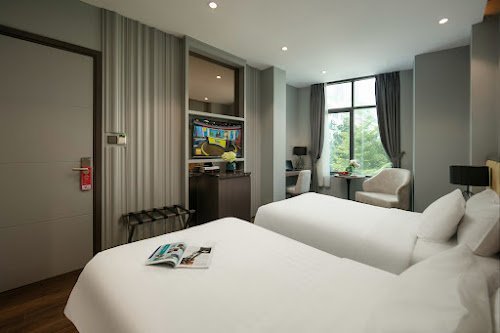
What I needed during jet lag wasn’t stimulation—it was rhythm: sleep, reset, short outings, easy return. Ping Hotel in Me Tri fit that practical need well.
My most useful first-24-hours plan
- Morning: early light + short walk + simple breakfast.
- Noon: eat moderately, take only a short rest if needed.
- Afternoon: do one or two important things only.
- Evening: eat early, slow down, and sleep on local time.
When I held this rhythm, day two felt noticeably easier.
One lesson I kept
Jet lag is easier to shorten when you stop trying to prove you are unaffected by it.
The hardest part was not sleepiness
The hardest part for me was not just being sleepy at the wrong time. It was feeling mentally slower while still trying to perform as if nothing had changed. Jet lag quietly reduces sharpness: you read more slowly, decide more slowly, and get irritated more easily.
Only when I admitted that this was real did recovery start improving. The less I pretended to be normal, the faster I actually adjusted.
The business-travel lesson
If you arrive in Hanoi for work, don’t schedule your most important meeting in the exact window where your body is least reliable. A smart schedule is not just a full schedule. It is a schedule that leaves room for adaptation. I used to think that was weakness. Now I think it is professionalism.
Related reading
Frequently asked questions (FAQ)
How long does jet lag last in Hanoi?
It varies, but the first few days are usually the hardest.
What helped recovery most?
Morning light, local meal timing, disciplined sleep, and lighter schedules.
Should I sleep a lot during the day?
Not too much; a short nap is usually better than long daytime sleep.
What should business travelers watch out for?
Keep day one lighter and add time flexibility to early meetings.
Is Ping Hotel useful during jet-lag recovery?
Yes, if you want a calm base near Keangnam/Me Tri to reset and rest.
Share This Article
Book Ping Hanoi Hotel
- Phone: (84.4) 3 7858408 / 3 7858409
- Hotline: 0904.77.14.26
- Email: sales@pinghotel.vn
- Address: 26 Me Tri Ha Street, Nam Tu Liem District, Hanoi
- Location tip: About 800m from Keangnam Landmark 72 (walkable).
- Book online at pinghotel.vn


